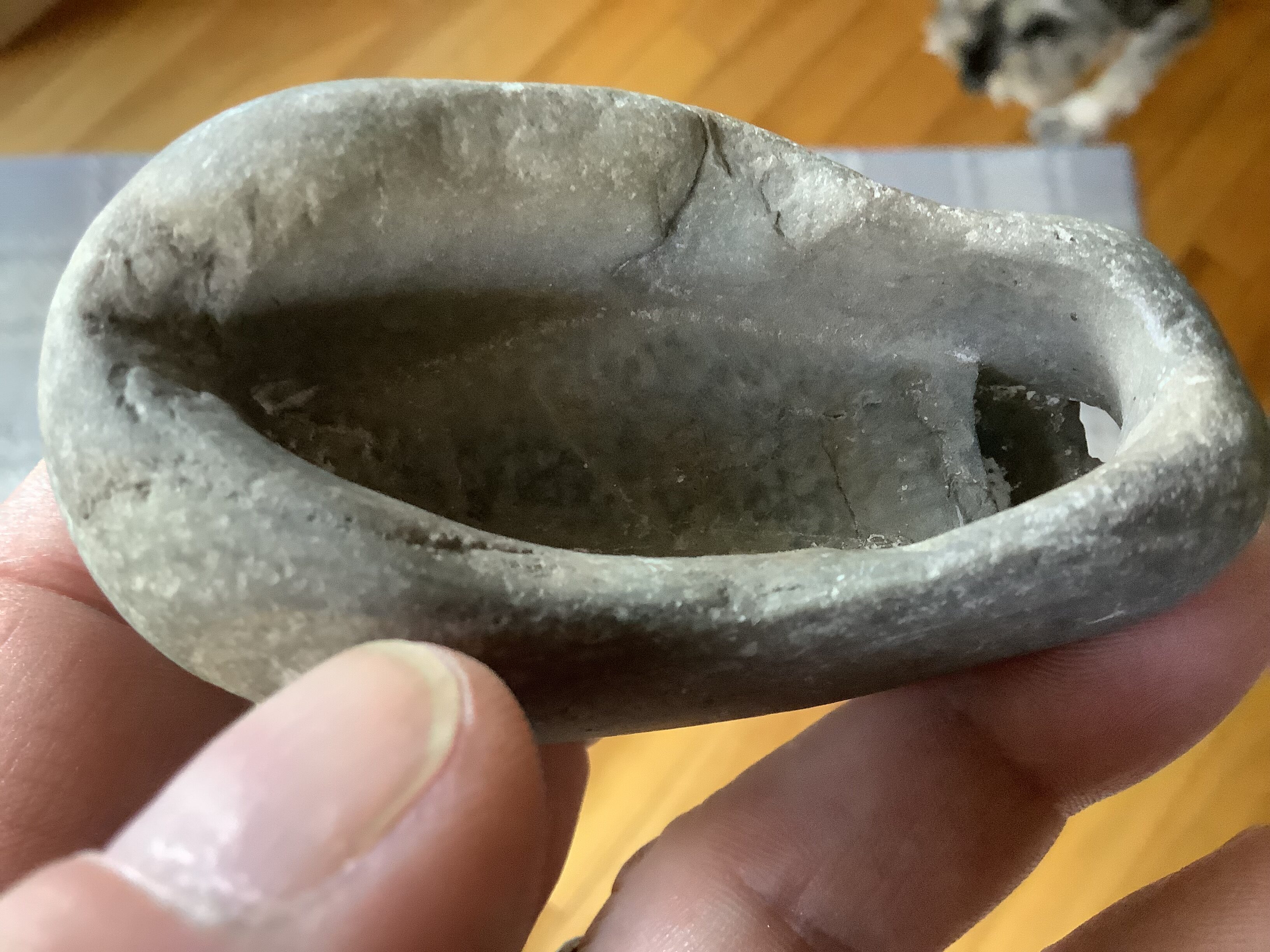
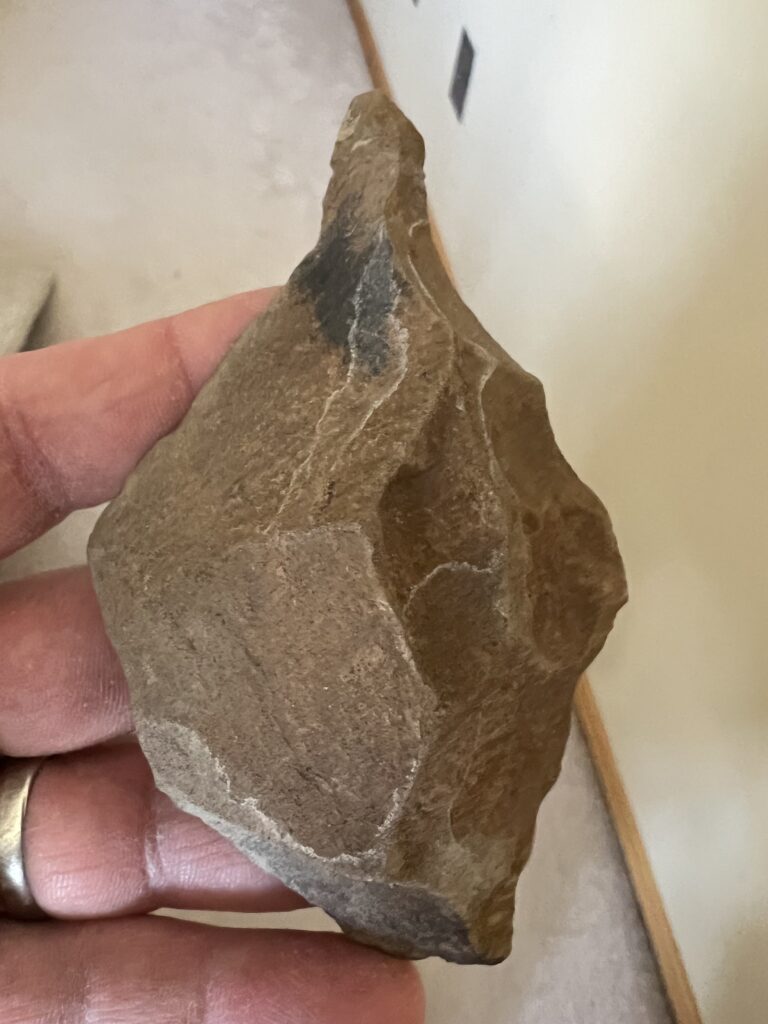
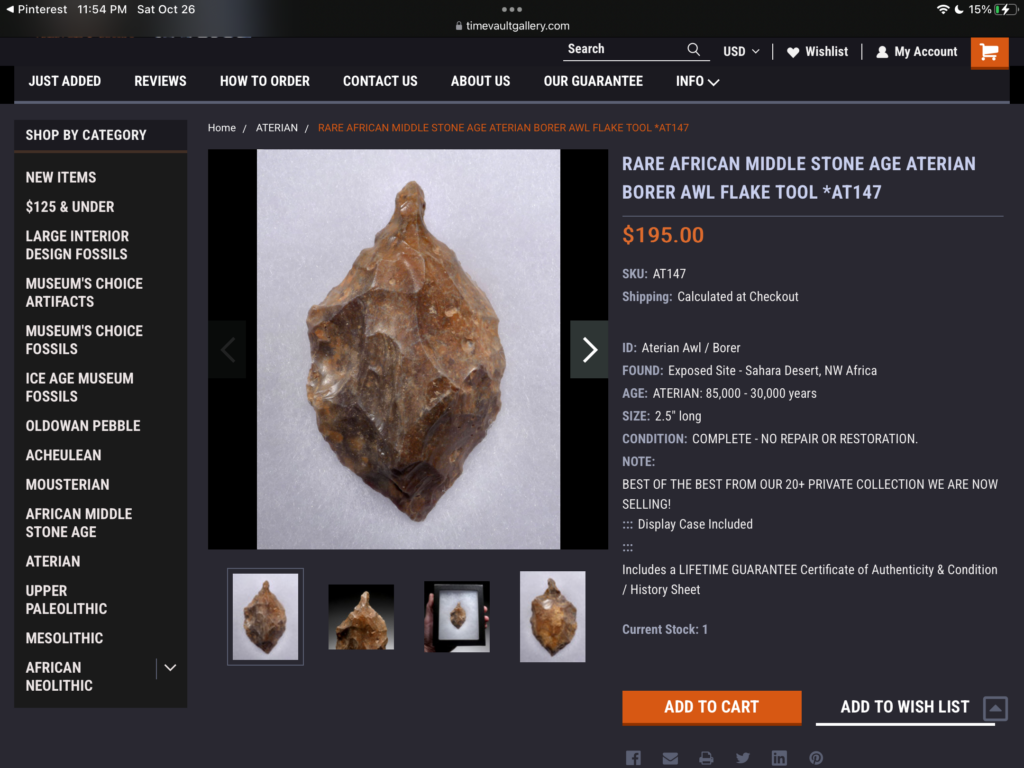
The following are examples of “authenticated” lithic tools that I have found displayed in museums and private collections around the world. You will see that they have the same shape and features as pieces I have found at this small site in Alberta, Canada. Despite this fact the local “experts” I have show these examples to tell me the pieces I find are nothing more than “random rocks” . This make absolutely no sense to me.
The image on the right is an “authenticated” Borer awl flake tool from Africa. The piece on the left from my collection is considered a “random rock” by the local “experts”.
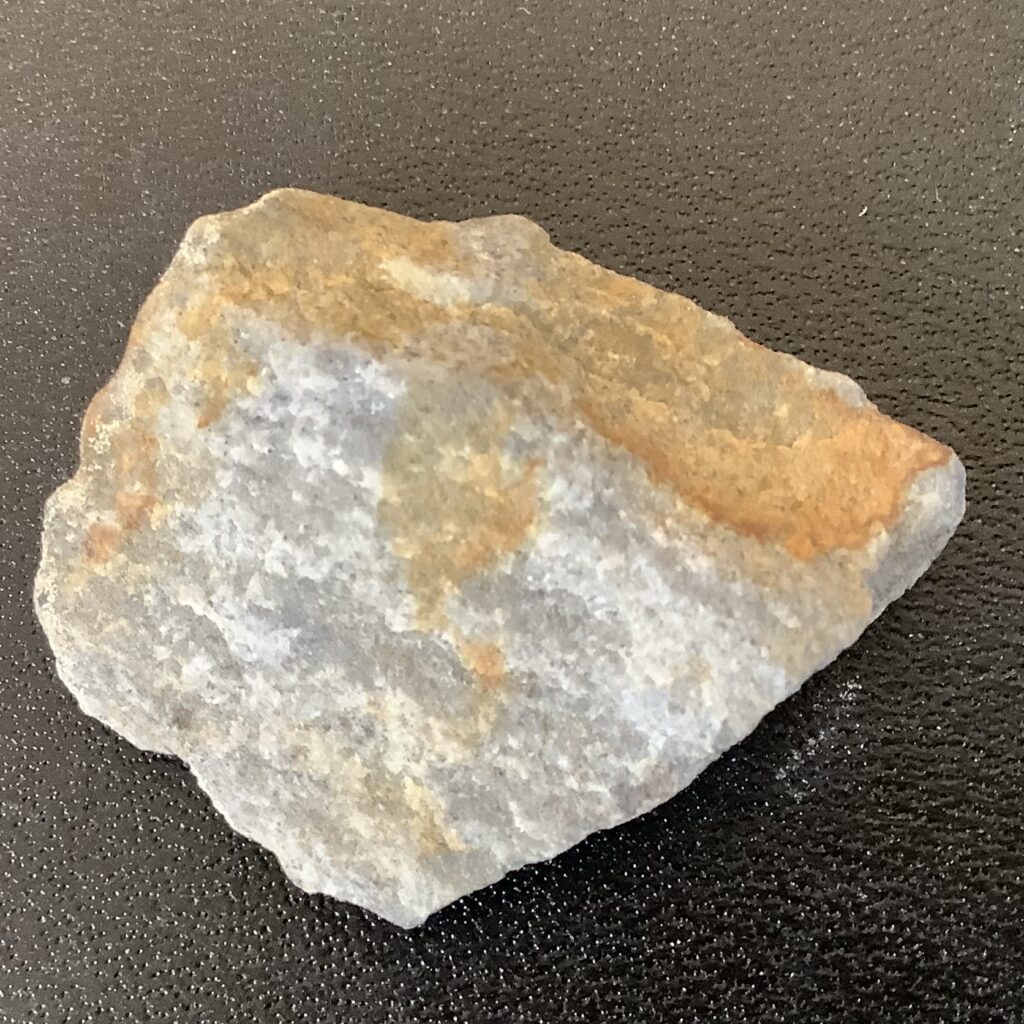
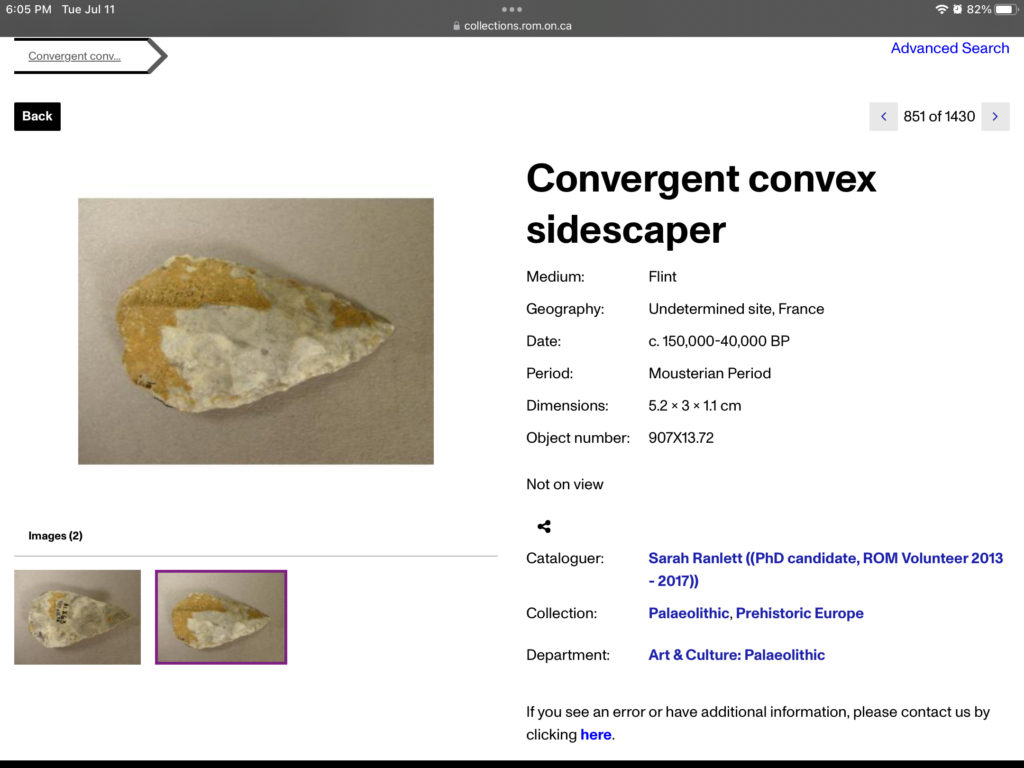
The same thing here. The convergent convex side scraper on the right is from France and on display at the Royal Ontario Museum. The piece on the left is another “random rock” from my collection. Both have a convex groove running along the top edge and they both have the same colour orange residual stain in the same location.
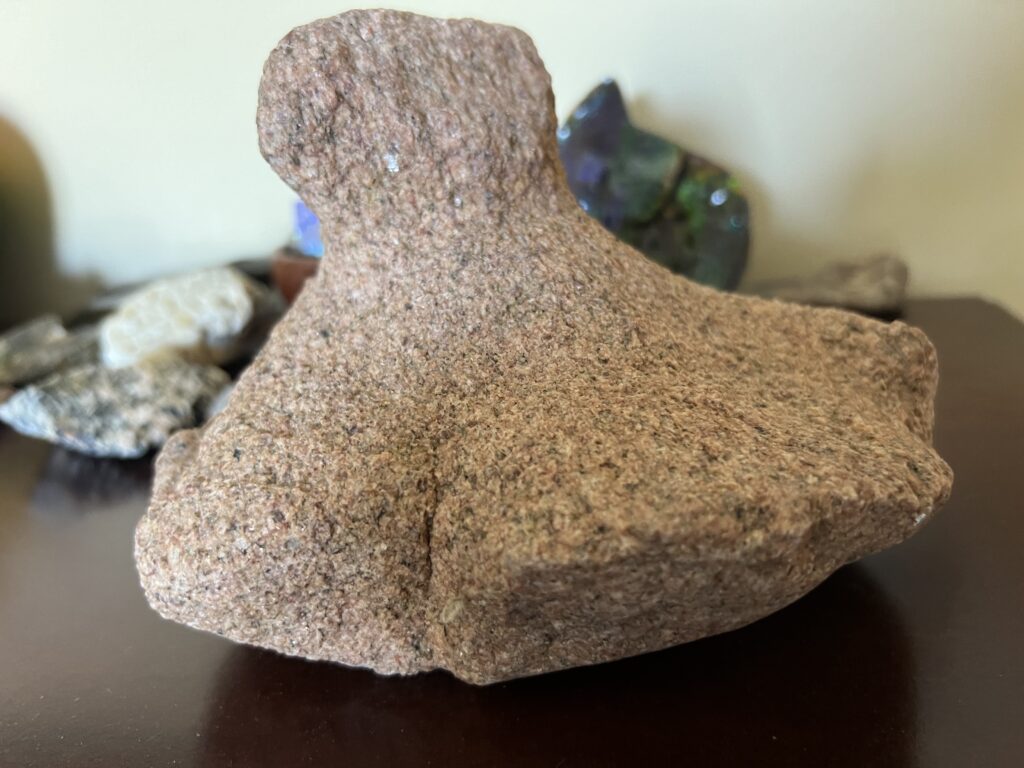
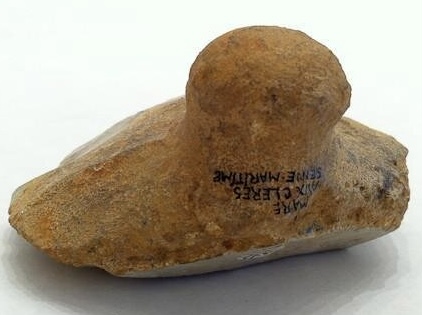
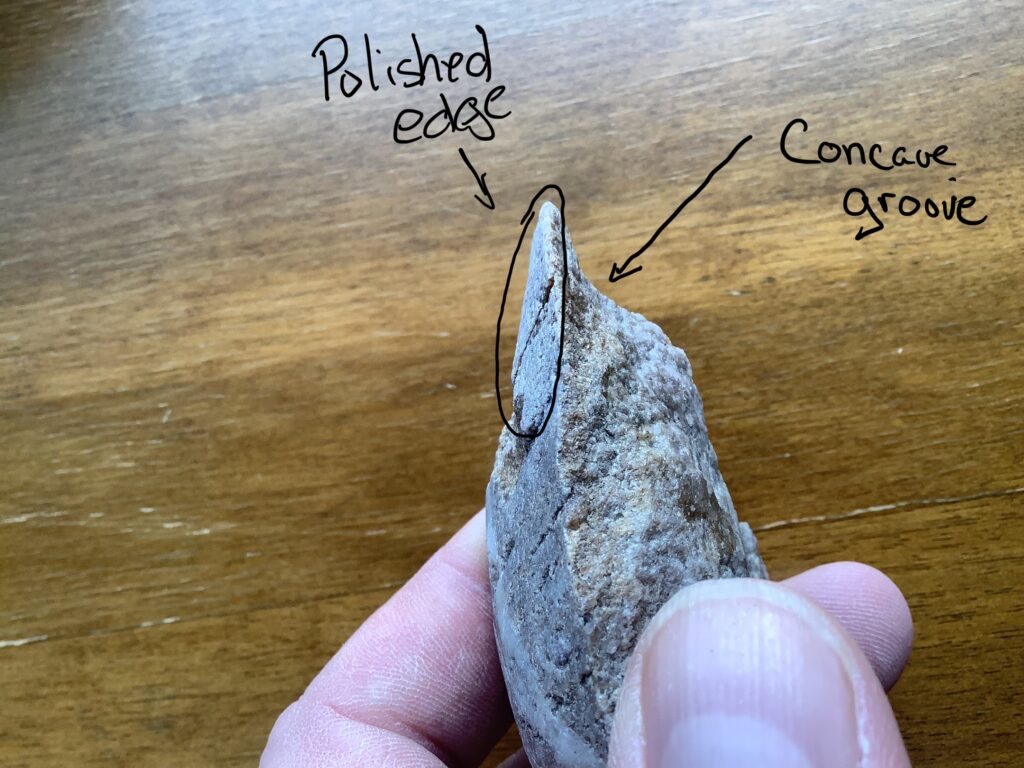
The “random rock” on the left is from my collection. The “artifact” on the right I believe is from France.
Both have a highly polished area in the same location and only that location on what I would call the bottom.
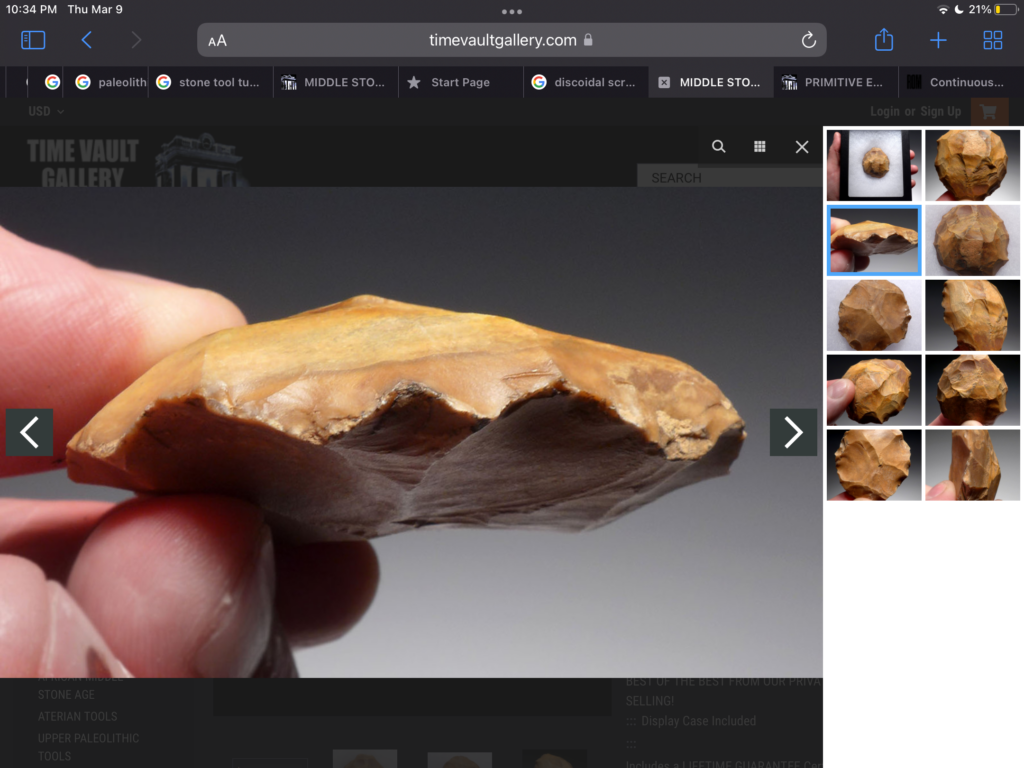
Another example:The piece one the left is a an “Authenticated” 360 degree scraper from Africa. The piece on the right is a “random rock”from my collection. Both are approximately the same size and shape and both have a scalloped edge that results from removing material in a systematic manner.
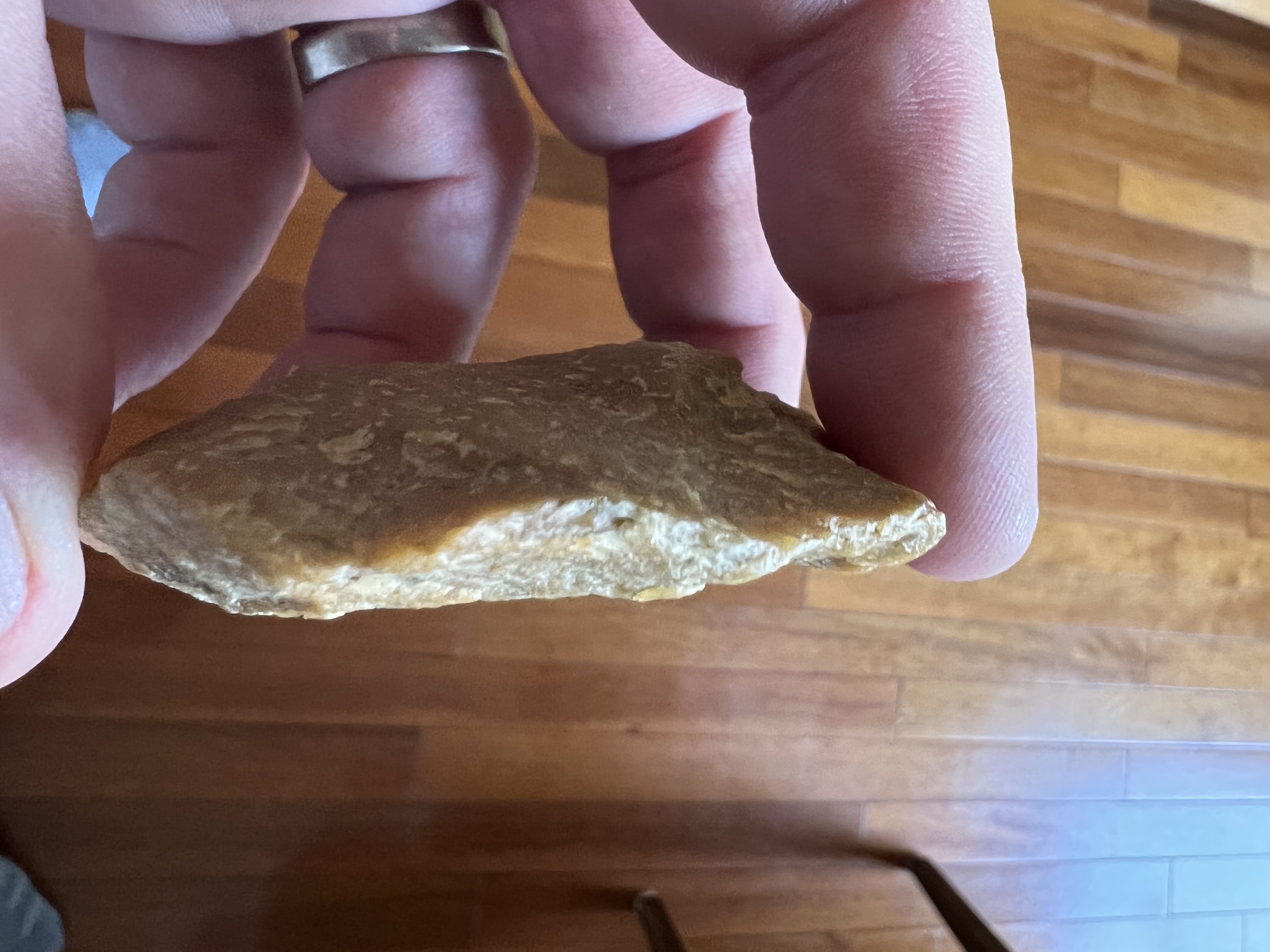
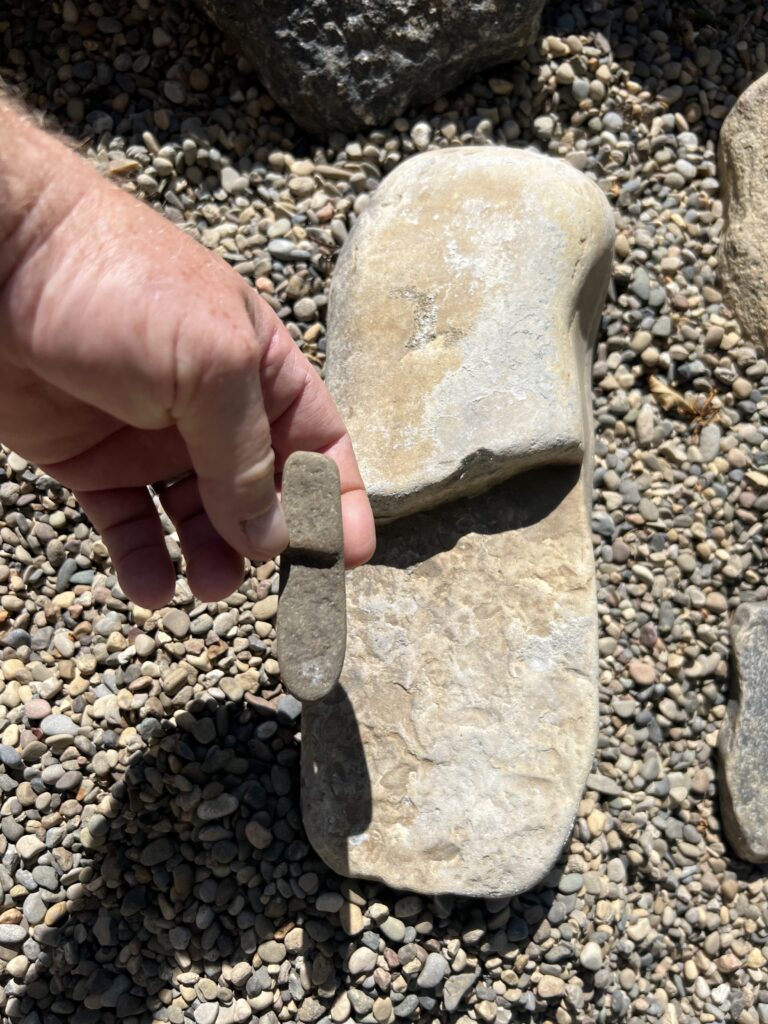
The authenticated abrader/grinding stone on the left is on display at the Smithsonian. The “random rocks” on the right are in my collection.
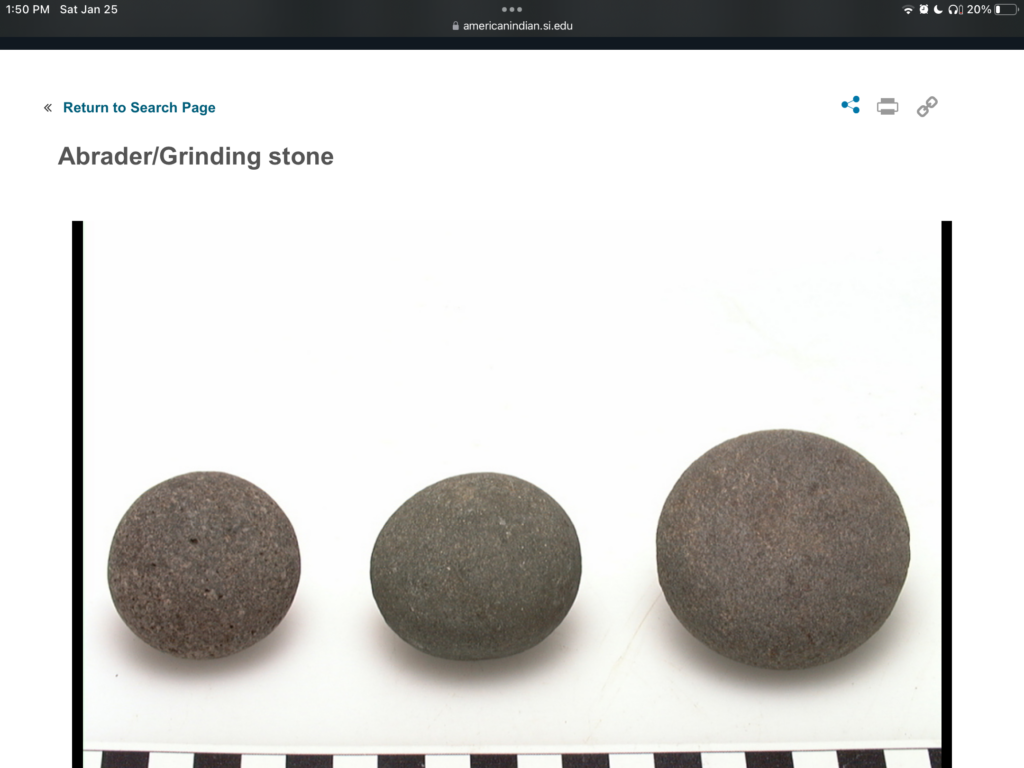
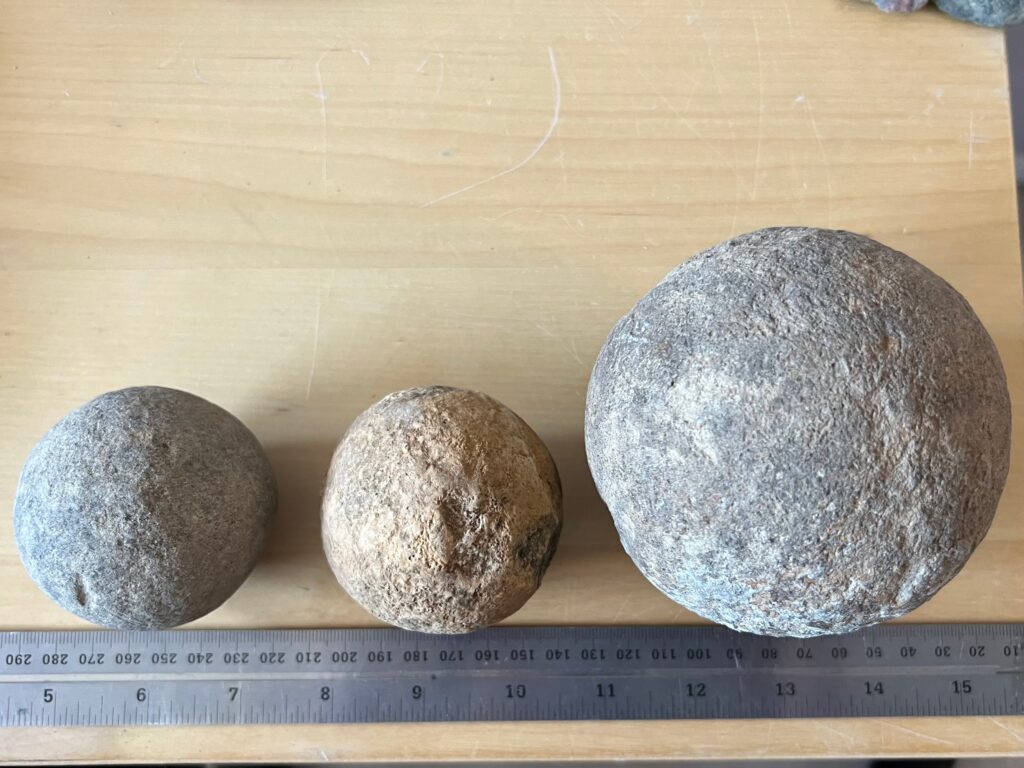
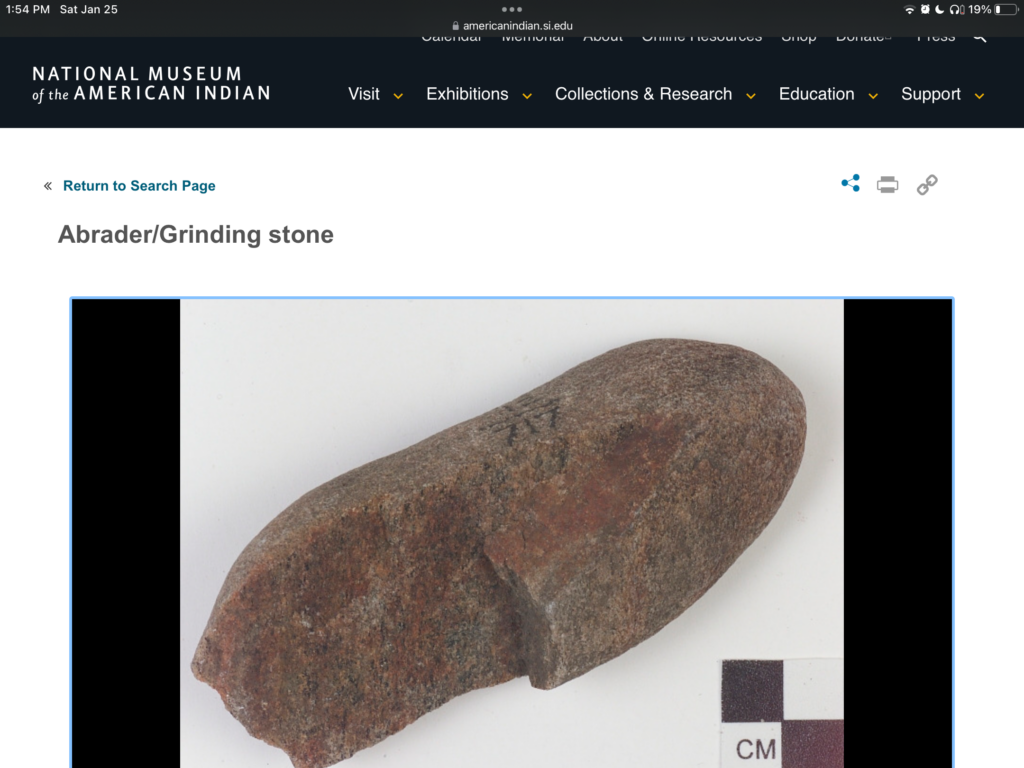
Another “authenticated” tool on display at the Smithsonian. “Random rocks” on the right.
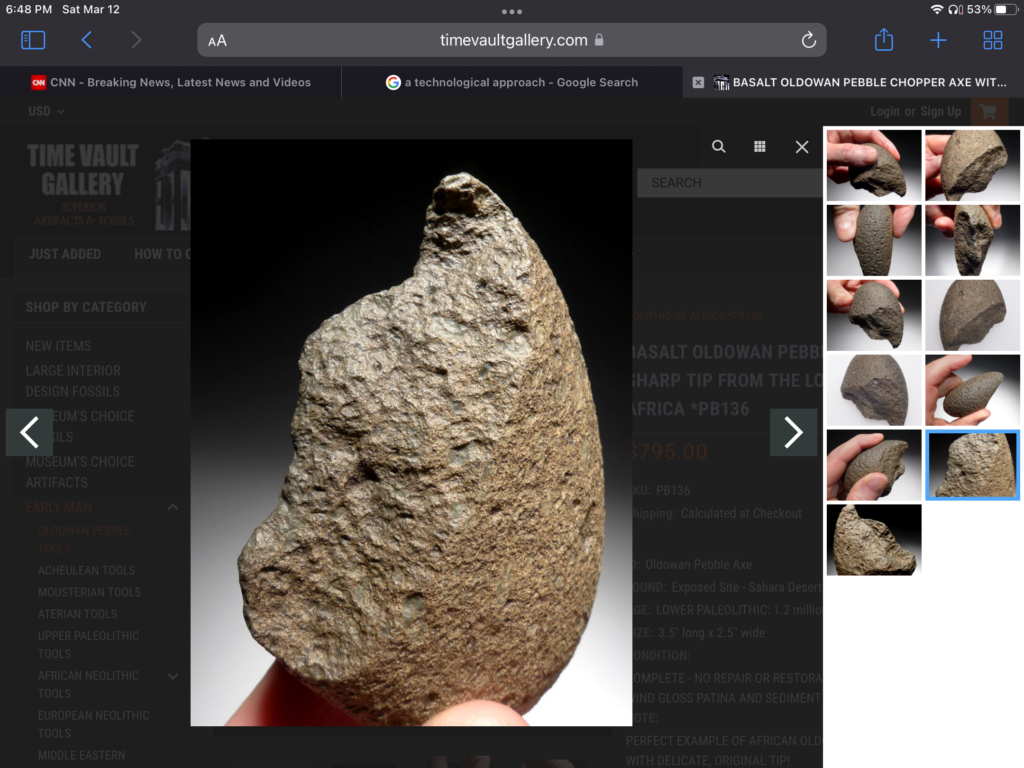
An “authenticated” basalt, Oldawan Pebble Chopper axe. The second image is a “random rock” from my collection. Both have a similar convex groove at the tip. both are similar in size and both have similar tool marks in the same locations.
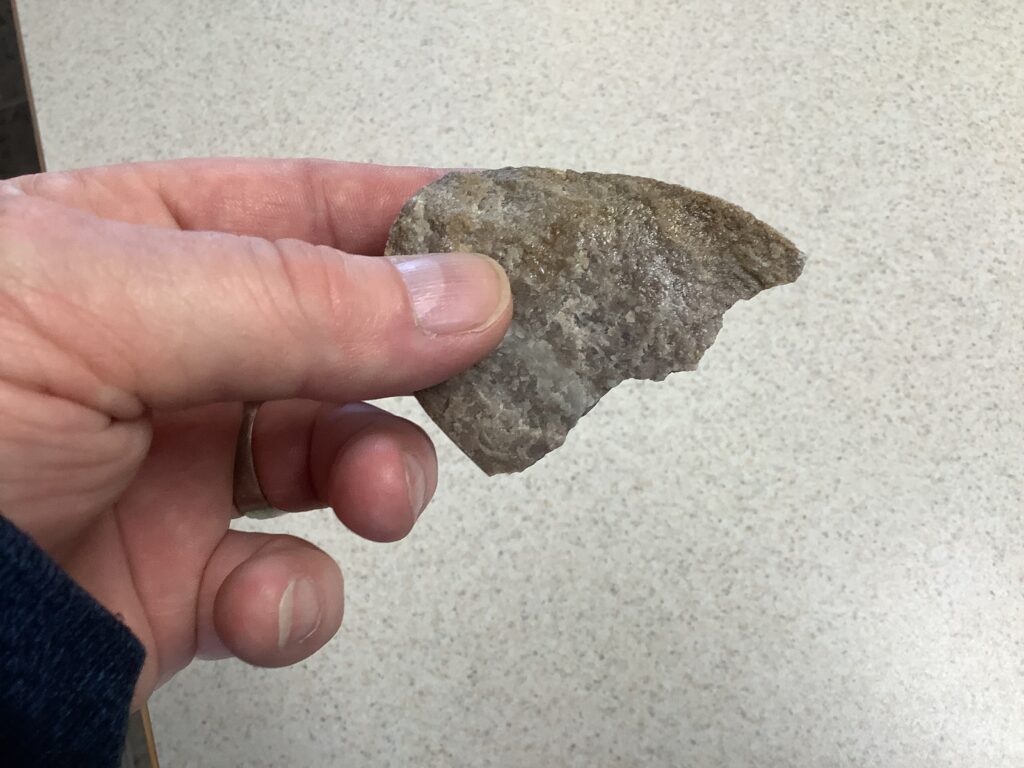
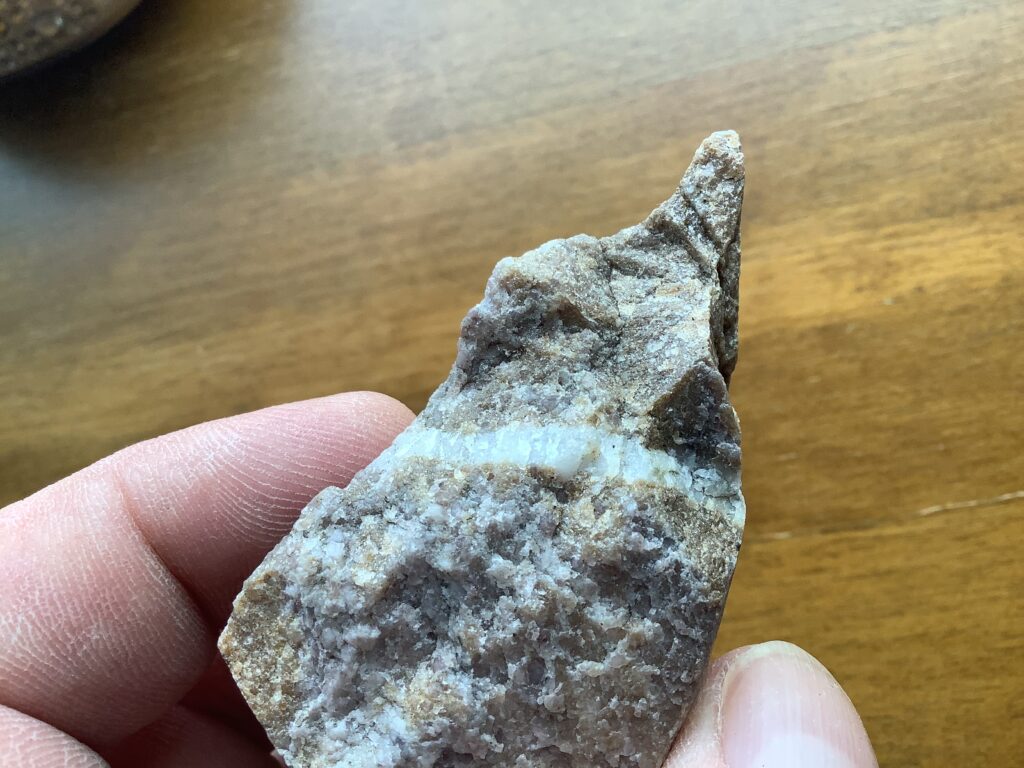
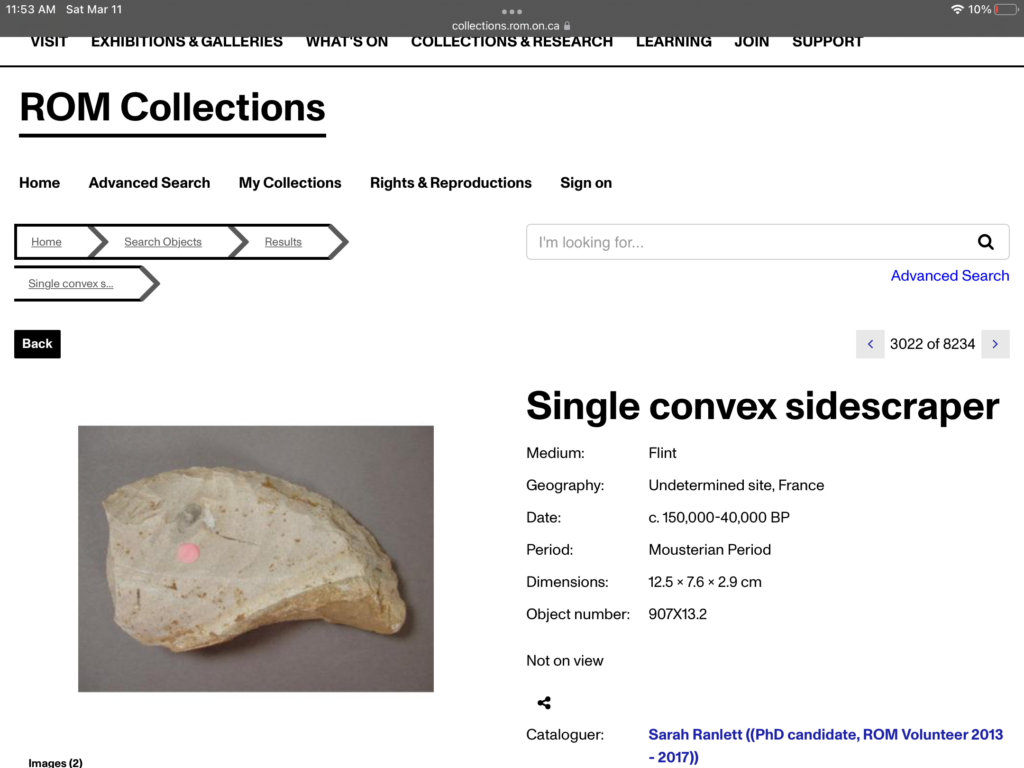
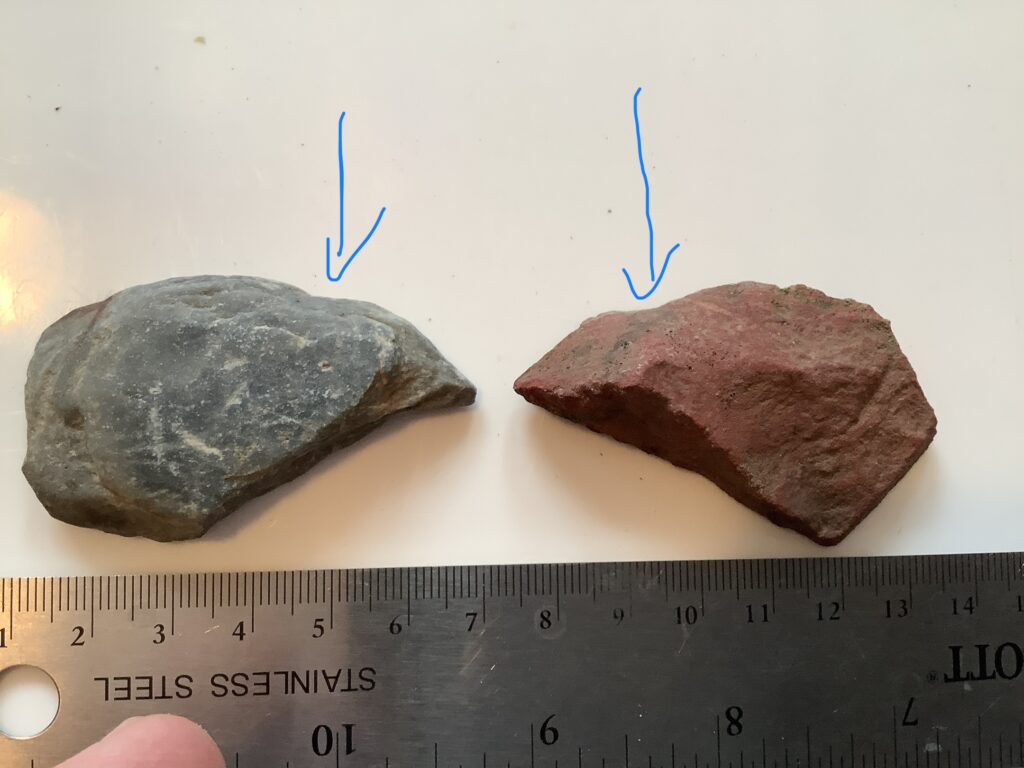
A “authenticated” single convex side scraper on display at the Royal Ontario Museum. Two “random” rocks” on the left are in my collection. The blue arrows point to similarly sized concave notches in the same area.
The piece on the right is on display in a private collection and was found in Ontario, Canada. The piece on the right is a “random rock” from my collection and found in Alberta, Canada which is about 3600km away..
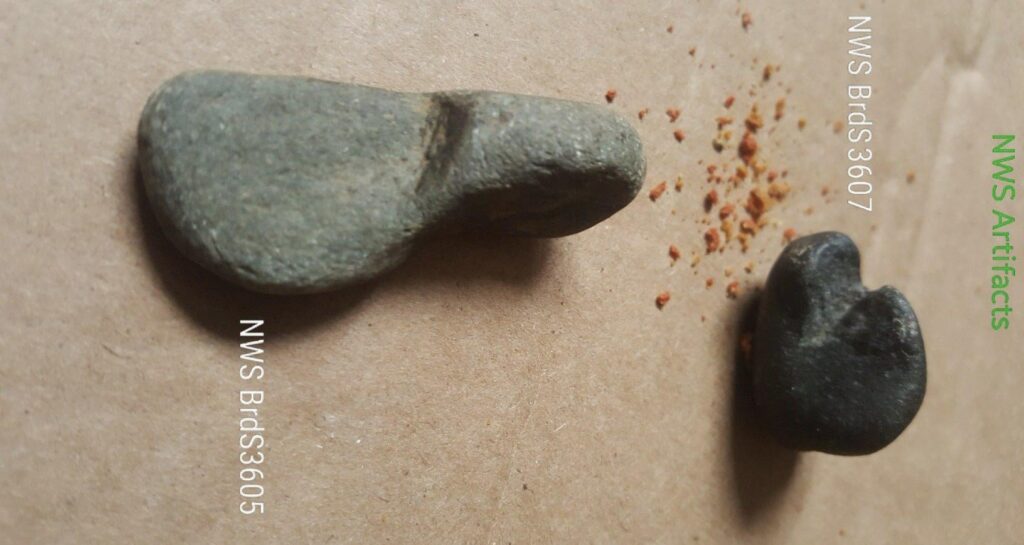
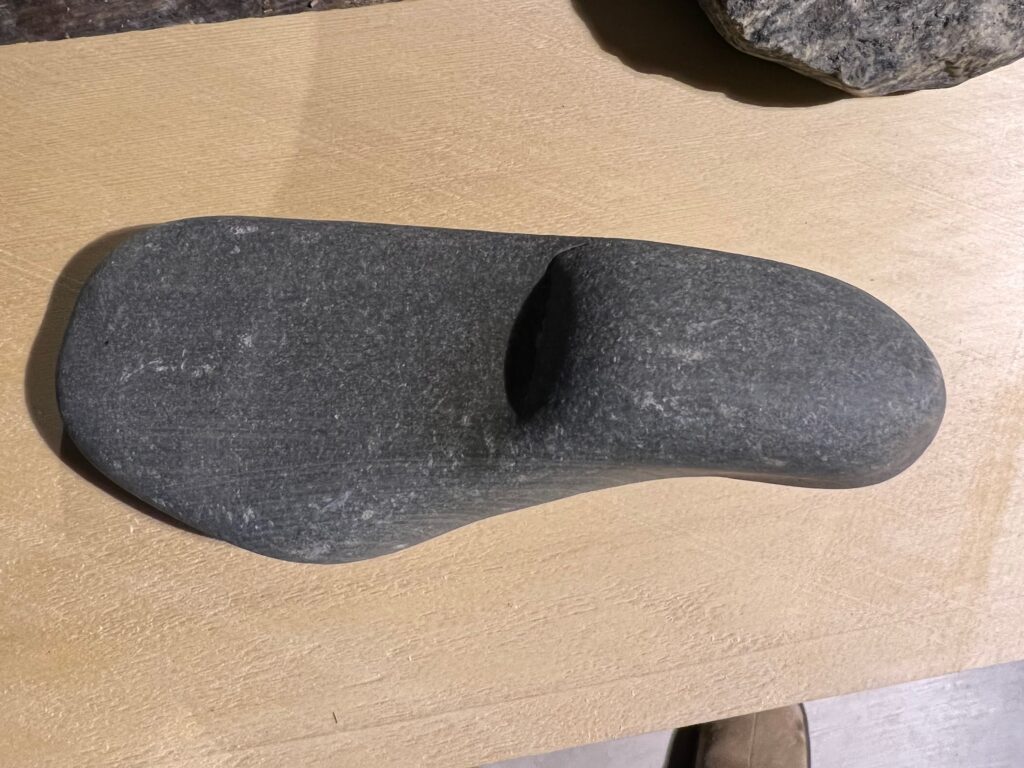
These are just a few examples I have dozens more. In fact. I can go online right now and within minutes I will find authenticated tools that are damn near copies of the “random rocks” I have in my collection.
I would truly love to hear some actual well thought out, scientifically based, answers as to what would cause this if not by our early ancestors.
Before you respond here are some points to consider.
The cobbles I find do not belong where I find them and because of this they have been historically labelled glacial erratics.
The cobbles I find were individually selected from all 360 degrees of direction and they were deposited at the same geologic time.
The majority of the cobbles I find are geologically and geographically distinct with no parent material in the vicinity.
I find repeating groups of similarly sized, shaped and featured cobbles.
It is my understanding for this to occur naturally, similarly sized, shaped and featured cobbles, each unique geologically and geographically were selectively and individually picked up by a glacier or glaciers and then these chosen rocks were dropped of at the same geologic time. sorted into repeating groups of similarly sized, shaped and featured rocks.
The answers I have been given so far by local experts…
“Glacial magic”
“It gets really cold up here and strange things happen”
“I don’t know but a geologist I know told me it can happen”
“You have so many examples, it has to be natural”??